



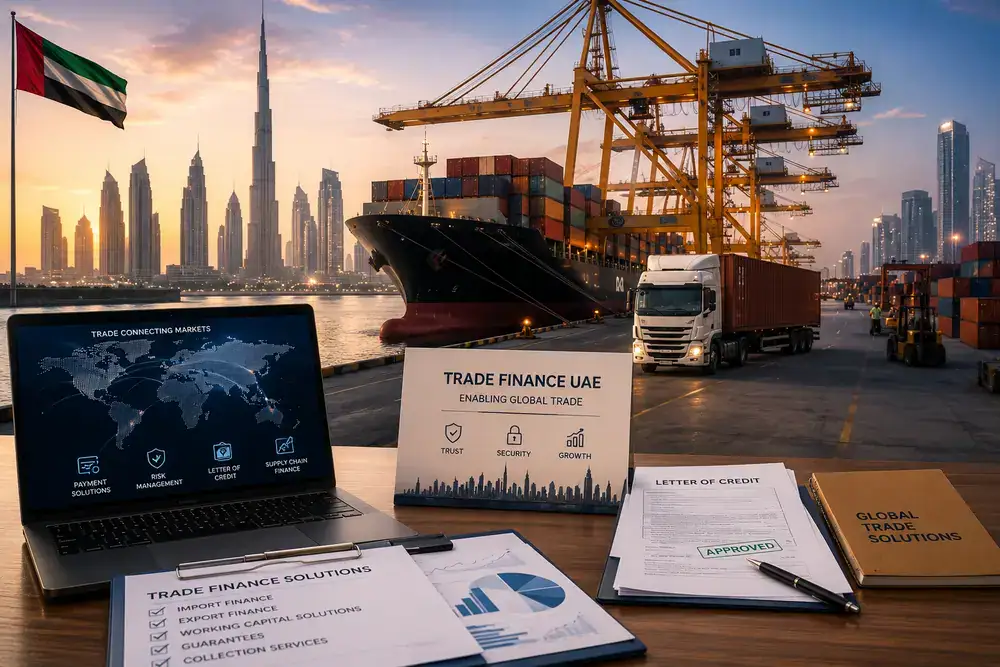
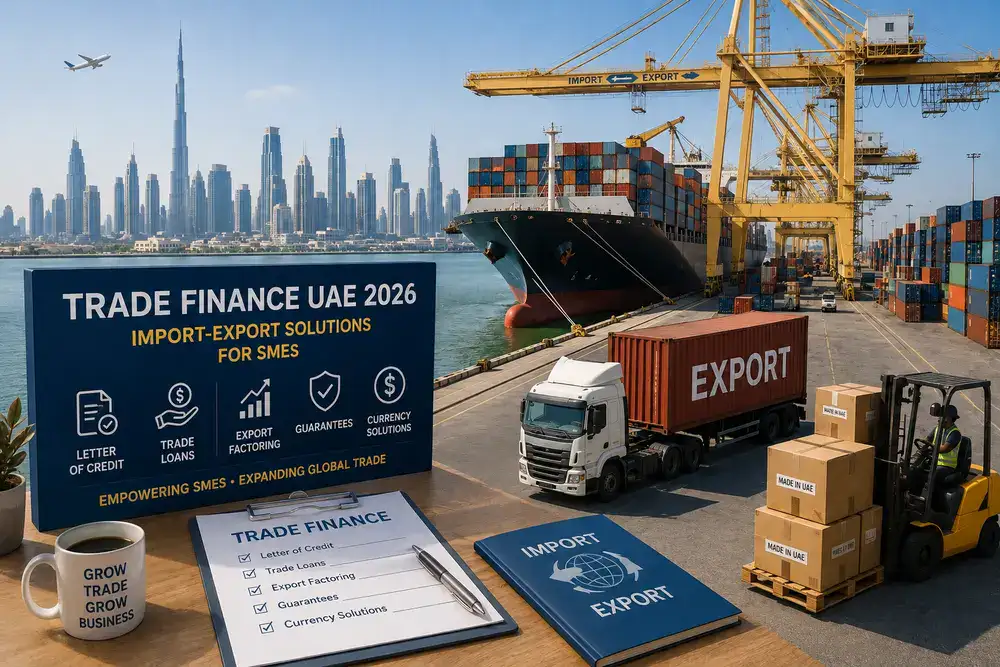
Trade has always been the backbone of the UAE economy, and for SMEs involved in importing or exporting goods, trade finance UAE solutions can be the key to managing cash flow without slowing down growth. Buying stock, paying overseas suppliers, and waiting for buyers to settle invoices all put pressure on working capital. Trade finance exists to bridge that gap.
With global supply chains shifting and digital trade platforms making cross-border transactions faster, understanding your trade finance options has never been more relevant for growing businesses.
What Is Trade Finance?
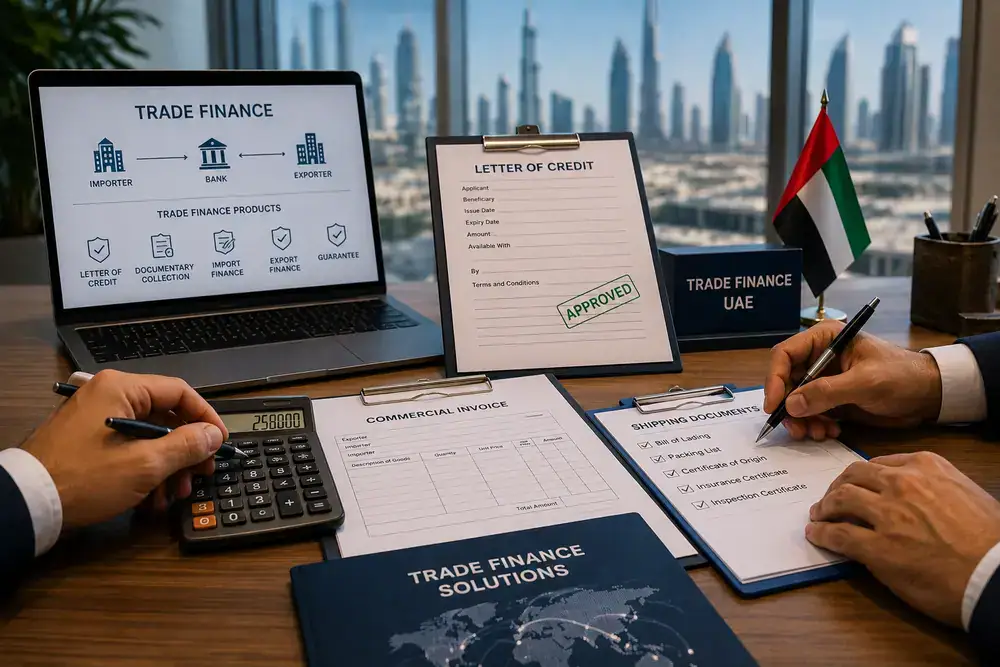
Trade finance refers to a range of financial products that help businesses fund and manage the risks involved in buying and selling goods, especially across borders. Instead of paying suppliers upfront from your own reserves or waiting weeks for customer payments to clear, trade finance tools let you access funds tied to your trade cycle, keeping your business liquid and operational.
This is particularly valuable for SMEs, which often have less cash buffer than larger corporations but still need to compete in the same international markets.
Common Types of Trade Finance
Several trade finance instruments are widely used by UAE businesses:
- Letters of credit – A bank guarantee to the seller that payment will be made once agreed conditions are met, reducing risk for both buyer and supplier.
- Bank guarantees – A commitment from your bank to cover a payment obligation if your business fails to meet it.
- Invoice discounting – Access to cash tied up in unpaid invoices, rather than waiting for the full credit period to pass.
- Import and export financing – Short-term funding specifically structured around the purchase or sale of goods.
Each instrument serves a different purpose, and many businesses use a combination depending on their trade relationships and cash flow needs.
Why SMEs Are Turning to Trade Finance More Than Ever
Global trade has become more complex, with longer shipping times, currency fluctuations, and stricter supplier payment terms. At the same time, digital trade platforms and fintech-backed credit options are giving SMEs more ways to access working capital than traditional bank lending alone used to offer. This growing ecosystem means businesses no longer have to rely solely on their own cash reserves or wait months for traditional bank approval to fund a trade deal.
For SMEs trying to grow their import-export activity, trade finance offers a way to take on larger orders and new markets without straining day-to-day operations.
How Letters of Credit Protect Both Sides of a Deal
One of the biggest challenges in international trade is trust, especially when dealing with a new supplier or buyer in another country. A letter of credit solves this by having a bank guarantee payment once the seller proves they have shipped the goods as agreed. This protects the buyer from paying for goods that never arrive and protects the seller from shipping goods without getting paid.
For SMEs entering new trade relationships, a letter of credit can be the reassurance both parties need to move forward with confidence.
Getting Started with Trade Finance
Most banks and trade finance providers will assess your business based on trading history, the nature of your trade relationships, and the value and frequency of your transactions. To prepare for an application, gather your trade licence, recent trade documents such as purchase orders and invoices, bank statements, and details of your key suppliers or buyers.
It also helps to have a clear picture of your trade cycle, meaning how long it typically takes between paying suppliers and receiving payment from customers. This information helps lenders structure a facility that actually matches how your business operates.
Choosing the Right Trade Finance Partner
Trade finance products can be complex, and terms vary significantly between providers. Working with a consultant who understands both the UAE banking landscape and international trade practices can help you choose the right combination of instruments, negotiate better terms, and avoid costly mistakes in your first few trade deals.
Related Blog – Trade Finance UAE: How It Assists SMEs Grow Their Import-Export Business
Mistakes to Avoid When Using Trade Finance
Some businesses take on trade finance facilities without fully understanding the fees and repayment terms attached, which can eat into margins on lower-value deals. Others apply for a generic facility instead of matching the instrument to their actual trade cycle, leading to cash flow mismatches down the line. Reading the fine print and asking your bank or consultant to explain the total cost of a facility, not just the headline rate, will help you avoid unpleasant surprises later.
Final Thoughts
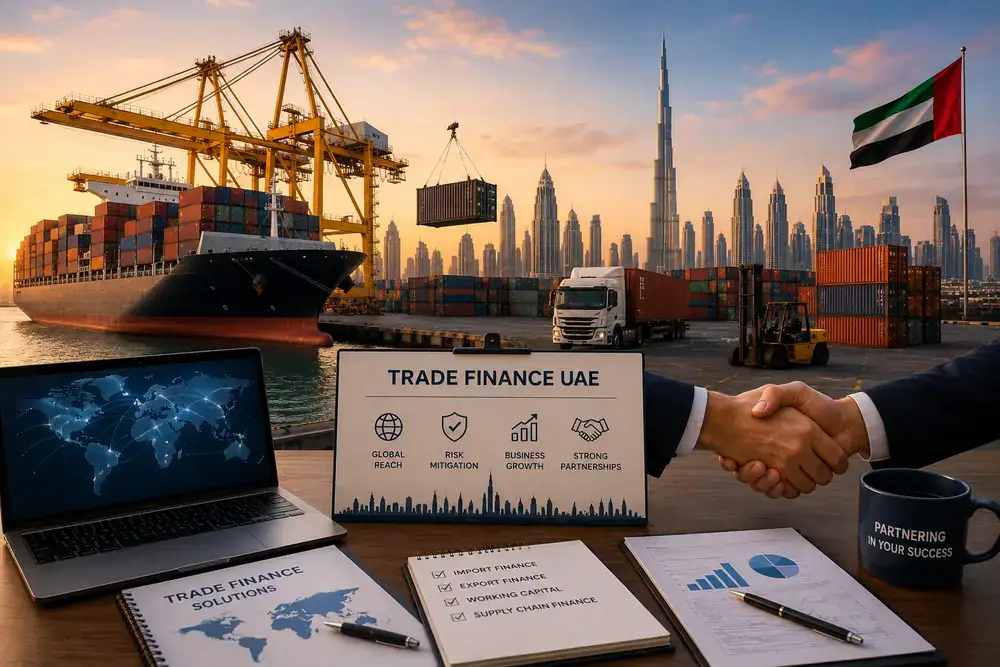
Trade finance UAE businesses rely on plays a critical role in keeping import-export operations running smoothly. From letters of credit to invoice discounting, these tools give SMEs the working capital and risk protection needed to grow confidently in international markets. If your business is expanding its trade activity, exploring the right trade finance solutions early can help you take on bigger opportunities without cash flow strain.
Related Posts

Corporate Bank Account Opening Dubai: Step-by-Step Guide for New Businesses
Opening a business account is one of the first real tests a new company faces…

Commercial Mortgage Dubai: How SMEs Can Finance Business Property in 2026
Buying business premises is a major milestone for any growing company, and commercial mortgage Dubai…

Business Loan UAE: A Complete Guide to Funding Your SME Growth in 2026
Running a small or medium business in the UAE takes more than a good idea.…
Trade Finance UAE: How It Assists SMEs Grow Their Import-Export Business
International trade brings huge opportunity for UAE businesses, but it also brings risk, especially when…