




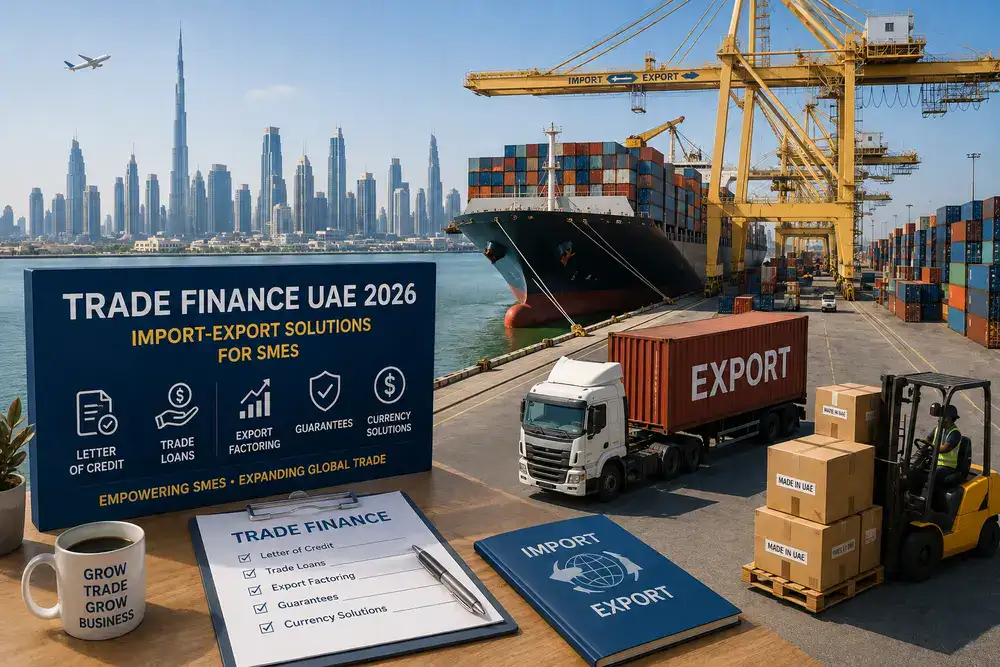
International trade brings huge opportunity for UAE businesses, but it also brings risk, especially when dealing with new suppliers or buyers overseas whom you have never met in person. This is where trade finance UAE providers step in, offering tools that protect cash flow and reduce risk on both sides of a transaction. For SMEs looking to expand into import-export activity, understanding trade finance is one of the smartest moves you can make, since it often determines whether you can take on larger orders in the first place. This guide covers the main solutions available and how to know which one fits your business.
What Is Trade Finance and Why It Matters
Trade finance covers a range of financial products designed to support businesses buying or selling goods across borders. It bridges the gap between when a supplier expects payment and when a buyer actually receives and sells the goods, a gap that can stretch to several months depending on shipping times and payment terms. Without it, many SMEs would struggle to take on larger international orders simply because of cash flow timing, even when the underlying business opportunity is a strong one.

Common Trade Finance Solutions for UAE Businesses
Depending on your trade activity, different solutions apply.
- Letters of credit, which guarantee payment to suppliers once agreed conditions are met
- Bank guarantees, which reassure buyers or partners of your financial commitment
- Invoice discounting, which unlocks cash tied up in unpaid invoices
- Import and export financing, which covers the cost of goods before resale
Each tool solves a different problem, so the right mix depends on your specific trade cycle, the countries you deal with, and how much trust already exists between you and your trading partners.
How Trade Finance Reduces Risk in International Trade
Cross-border trade involves risks that domestic transactions rarely face, including currency fluctuations, unfamiliar legal systems, and the possibility that a buyer or supplier does not honor their side of the deal. Trade finance tools shift much of this risk to the bank, giving both parties confidence to proceed with the transaction even when they have no prior trading history together. This is often what allows a new business relationship to move forward at all.
Who Should Consider Trade Finance
Any SME involved in importing raw materials, exporting finished goods, or working with overseas partners can benefit. This is especially true for businesses scaling quickly, since rapid growth often creates cash flow gaps that trade finance can bridge without diluting ownership or taking on unnecessary long-term debt. Seasonal businesses that need to stock up ahead of peak demand also find trade finance useful for smoothing out cash flow across the year.
How to Get Started with Trade Finance
Start by mapping out your trade cycle, from placing an order to receiving payment from your buyer. These assists identify exactly where the cash flow gap occurs and which trade finance product addresses it best. From there, a lender will assess your trade history, the strength of your contracts, and your overall business profile before approving a facility. Businesses with a track record of completed trades, even on a smaller scale, tend to move through this assessment faster than first-time importers or exporters.
Working with the Right Finance Partner
Not every bank offers the same range of trade finance products, and pricing can vary significantly between institutions. Working with a consultant who understands both UAE banking requirements and international trade practices assists you access the right facility faster, often at better terms than approaching a bank without guidance. This is particularly valuable if you are entering a new market or working with a supplier or buyer for the first time, since a specialist can often flag potential documentation issues before they cause delays at the shipping stage.
Building Trade Finance into Your Growth Plan
Businesses that treat trade finance as an ongoing part of their operations, rather than a one-off solution for a single tricky order, tend to scale more smoothly. Reviewing your trade finance needs alongside your sales forecast each quarter assists you spot cash flow gaps before they become urgent, and it gives your bank time to assess and approve larger facilities as your order volumes grow. Many established importers and exporters renegotiate their trade finance limits every year as their business expands, which keeps pace with new supplier relationships and larger client contracts instead of scrambling for extra headroom mid-deal.

Conclusion
Trade finance UAE solutions give SMEs the confidence to take on bigger international opportunities without straining cash flow. Whether you are just starting to import or export, or you are ready to scale existing trade relationships into new markets, understanding these tools puts you in a much stronger negotiating position with both your bank and your trading partners. The businesses that grow fastest in international trade are usually the ones that treat trade finance as a strategic tool rather than a last resort, often with a partner like SME Finance assisting them structure the right facility from the start.
Related Posts

Trade Finance UAE: How SMEs Can Unlock Working Capital for Import-Export Growth
Trade has always been the backbone of the UAE economy, and for SMEs involved in…

Corporate Bank Account Opening Dubai: Step-by-Step Guide for New Businesses
Opening a business account is one of the first real tests a new company faces…

Commercial Mortgage Dubai: How SMEs Can Finance Business Property in 2026
Buying business premises is a major milestone for any growing company, and commercial mortgage Dubai…

Business Loan UAE: A Complete Guide to Funding Your SME Growth in 2026
Running a small or medium business in the UAE takes more than a good idea.…